

Introduction
Beauty has been discussed, studied, and interpreted in different ways throughout human history. From ancient sculptures to modern photography, people have often searched for patterns that explain why certain facial features appear visually balanced. One concept that frequently attracts attention is the golden ratio, a mathematical relationship associated with proportion, harmony, and natural patterns. When applied to facial appearance, this idea becomes a fascinating subject for people interested in beauty, mathematics, art, and facial aesthetics.
The golden ratio face is commonly discussed as a way of examining the proportions between different facial features. It is connected to the mathematical value of approximately 1.618, which appears in discussions about architecture, design, nature, and visual composition. Some beauty enthusiasts use this concept to explore facial symmetry and the relationship between the eyes, nose, lips, forehead, and chin. However, facial attractiveness is much more complex than a single mathematical measurement.
What Is the Golden Ratio?
The golden ratio is a mathematical proportion represented by the Greek letter phi (φ). Its approximate value is 1.618, and it describes a relationship in which the ratio of a larger quantity to a smaller quantity is the same as the ratio of their combined total to the larger quantity. This relationship has attracted attention in mathematics, architecture, painting, and design for centuries.
The concept is often associated with visual balance because certain compositions based on this proportion can appear naturally pleasing. Artists and designers sometimes explore the golden ratio when arranging shapes, creating layouts, or developing visual patterns. It is also discussed in connection with natural structures such as spiral arrangements and plant growth. Although its applications are interesting, it is important to understand that not every beautiful object or natural structure follows this mathematical pattern.
Understanding the Golden Ratio Face
A golden ratio face refers to an approach that examines facial proportions using the mathematical relationship of approximately 1.618. People interested in facial aesthetics sometimes compare the length and width of the face or examine the distances between individual features. These measurements are used to discuss how different parts of the face relate to one another.
For example, someone might examine the distance between the eyes, the width of the nose, the length of the forehead, or the relationship between the lips and chin. Certain online beauty tools use facial measurements to produce a score based on selected proportions. However, these scores should not be considered scientific measurements of someone’s actual beauty. Human faces naturally vary, and there is no universally accepted mathematical formula that determines whether a face is attractive.
How Is the Golden Ratio Applied to Facial Features?
The golden ratio is sometimes applied to different facial measurements to explore visual balance. These comparisons are generally based on distances, widths, and lengths between specific points on the face. Although the measurements can be interesting, different methods may produce different results because there is no single standardized approach.
Some commonly discussed facial measurements include:
-
Face length and width: Comparing the vertical length of the face with its horizontal width.
-
Eye spacing: Examining the distance between the eyes and their relationship to eye width.
-
Nose proportions: Comparing nose length and width with other facial measurements.
-
Lip proportions: Looking at the relationship between the upper and lower lips.
-
Forehead and chin: Examining how the upper and lower sections of the face relate to the middle section.
These comparisons provide a way to discuss facial structure, but they do not establish a universal beauty standard. Facial features can look attractive in many different combinations.
The Importance of Facial Symmetry
Facial symmetry is another concept frequently discussed alongside mathematical beauty standards. It describes how closely the left and right sides of the face resemble one another. A symmetrical face may have similar eye positions, cheekbone structures, jawlines, and eyebrow shapes on both sides.
People often associate symmetry with visual balance, but perfectly symmetrical faces are extremely uncommon. Most individuals have small differences between the two sides of their faces. One eyebrow may sit slightly higher, one cheek may appear fuller, or one side of the smile may move differently.
These natural differences contribute to individual appearance. Research into facial perception suggests that symmetry can influence attractiveness judgments, but it is only one factor among many. Expression, skin appearance, age, familiarity, and cultural preferences also influence how people perceive beauty.
Why Do People Find the Golden Ratio Face Interesting?
Interest in facial proportions has increased through beauty discussions, photography, social media, and digital technology. People enjoy exploring how mathematical ideas can be connected to something as familiar as the human face. The subject also provides an opportunity to understand how visual perception works.
Another reason for its popularity is the availability of online facial analysis tools. These tools allow users to upload photographs and compare selected facial measurements. Some provide numerical scores, diagrams, or proportion guides. While these features can make the subject entertaining, their results should be interpreted carefully because camera angles, lighting, facial expressions, and image quality can affect measurements.
The golden ratio face has therefore become both an educational topic and a popular beauty discussion. Its appeal comes from the combination of mathematics, technology, and personal curiosity.
Can the Golden Ratio Determine Facial Attractiveness?
The golden ratio cannot independently determine whether someone has an attractive face. Although mathematical proportions can help describe certain relationships between facial features, beauty does not depend on one number. Human attractiveness involves a combination of biological, psychological, cultural, and personal influences.
Different societies have developed different beauty preferences throughout history. Some cultures appreciate softer facial structures, while others may favor prominent cheekbones, distinctive noses, or particular eye shapes. Even within the same society, individual preferences can vary considerably.
A person may have facial proportions that do not match commonly shared golden ratio diagrams and still be widely considered attractive. Unique features often contribute to someone’s recognizable appearance and personal identity. Therefore, mathematical measurements should be treated as one interesting way to study facial structure rather than a final judgment about beauty.
The Role of Technology in Facial Analysis
Modern technology has made facial proportion analysis more accessible than ever. Artificial intelligence applications, image-processing software, and facial recognition systems can identify specific points on a photograph. These points may include the corners of the eyes, nose tip, mouth edges, cheekbones, and chin.
Some beauty applications use these measurements to compare facial proportions with predefined mathematical models. Users may receive visual guides or numerical results showing how closely their features match a selected standard. However, the accuracy of these results depends on the software, measurement method, and quality of the photograph.
Technology can help people understand facial geometry, but it cannot completely measure subjective attractiveness. A numerical score does not capture personality, confidence, facial expression, or the many qualities that influence how someone is perceived.
Golden Ratio Face and Different Face Shapes
Human faces come in many natural shapes, and each shape has distinctive characteristics. Understanding these differences is more useful than assuming that everyone should have identical proportions.
Oval Face: Oval faces generally have balanced proportions, with a slightly narrower jawline than the forehead. This shape is often discussed in traditional beauty guides because of its gradual contours.
Round Face: Round faces usually feature fuller cheeks and a softer jawline. Their length and width may appear relatively similar, creating a rounded overall appearance.
Square Face: Square faces often have a broader jawline and more defined angles. Their strong facial structure can create a distinctive and balanced appearance.
Heart-Shaped Face: This shape generally features a wider forehead and cheekbone area with a narrower chin. Its proportions create a noticeable transition from the upper to lower face.
Long Face: Long faces have greater vertical length compared with their width. Their appearance can vary depending on cheekbone structure, forehead height, and jawline definition.
Each face shape has its own characteristics, and none should be considered better or worse than another.
How Photography Affects Facial Proportions
Photography plays an important role in how facial features appear. A photograph does not always represent someone’s natural proportions accurately because the camera lens, distance, lighting, and angle can change the appearance of different facial areas.
For example, taking a selfie from very close to the face may make the nose appear larger while making the ears and other features look smaller. Wide-angle lenses can create additional distortion. Similarly, tilting the head or using strong side lighting may change the apparent shape of the jawline and cheekbones.
Anyone exploring facial measurements should understand these limitations. A straight-on photograph taken from an appropriate distance with even lighting may provide a more consistent reference. Even then, the resulting measurements remain estimates rather than definitive assessments of facial beauty.
Natural Beauty Beyond Mathematical Measurements
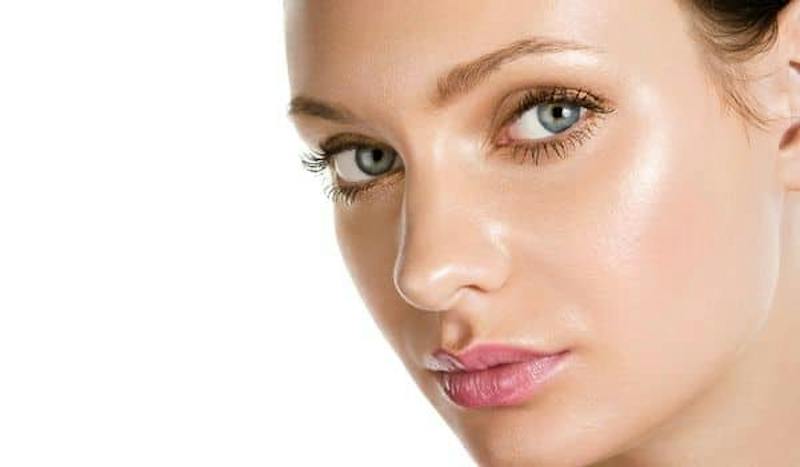
Although facial proportions are interesting, natural beauty includes qualities that cannot be represented through mathematical calculations. Facial expressions, confidence, personality, and individuality all influence how people experience someone’s appearance.
A genuine smile can change the overall impression of a face. Healthy-looking skin, expressive eyes, and natural movements can also contribute to visual appeal. These characteristics are not dependent on achieving a specific numerical ratio.
It is also important to remember that facial features change naturally over time. Growth, aging, lifestyle, and other factors can influence facial appearance. Comparing oneself with a fixed mathematical standard may create unrealistic expectations, especially when online photographs have been edited or digitally enhanced.
The most useful approach is to appreciate facial diversity while treating mathematical beauty concepts as educational subjects rather than strict requirements.
Common Myths About the Golden Ratio Face
Several misconceptions have developed around the relationship between the golden ratio and facial attractiveness. Understanding these myths can help people approach the subject more realistically.
Myth 1: Every attractive face follows the golden ratio.
There is no scientific basis for claiming that all attractive faces follow one mathematical proportion. People can have very different facial structures and still be perceived as attractive.
Myth 2: Perfect symmetry means perfect beauty.
Symmetry may influence visual perception, but perfect symmetry is neither common nor necessary for attractiveness. Small differences between facial features are normal.
Myth 3: A facial analysis score measures actual beauty.
Online applications use selected measurements and algorithms. Their scores are not universal scientific assessments of attractiveness.
Myth 4: The golden ratio is the only important beauty standard.
Beauty is influenced by many factors, including cultural expectations, individual preferences, expressions, and personal characteristics.
Recognizing these misconceptions makes it easier to understand the limitations of mathematical beauty theories.
Why Facial Proportions Matter in Art and Design
Facial proportions have played an important role in artistic education for centuries. Painters, sculptors, illustrators, and digital artists study the relationships between facial features to create convincing portraits. Understanding the placement of the eyes, nose, mouth, and jaw helps artists represent different expressions and face shapes.
The golden ratio is sometimes explored as an additional reference when studying composition and proportion. However, professional artists do not need to follow one mathematical formula to create appealing portraits. Realistic artwork often depends on observing individual characteristics rather than forcing every face into the same structure.
In graphic design, photography, and digital illustration, proportion guides can help create balanced compositions. These applications demonstrate how mathematical concepts can support creativity without restricting artistic individuality.
Conclusion
The golden ratio is an interesting mathematical concept that connects proportion, visual balance, and design. Its application to facial aesthetics has attracted attention because people are naturally curious about the relationship between facial features and perceived beauty. By exploring measurements such as face length, eye spacing, nose width, and lip proportions, individuals can learn more about facial geometry.
However, the golden ratio face should not be treated as a universal beauty formula. Facial attractiveness cannot be accurately reduced to a single number or online score. Symmetry, individual features, expressions, cultural influences, and personal preferences all contribute to how beauty is perceived. Every face has distinctive characteristics, and those differences are an important part of human appearance. Ultimately, mathematical proportions can help explain certain aspects of facial structure, but genuine beauty extends far beyond measurements.

