

Introduction
Understanding your facial structure can help you make better decisions about personal style, hairstyles, glasses, makeup, and accessories. Every person has a different facial appearance, influenced by features such as forehead width, cheekbones, jawline, and overall face length. Although many people can identify some of their facial characteristics by looking in a mirror, determining their exact face shape is not always easy. This is where a face shape detector becomes a useful digital tool for exploring facial proportions.
A face shape detector is designed to examine visible facial features and provide an estimated classification of your face shape. Depending on the tool, you may be able to upload a photograph or use your device’s camera for facial analysis. The results can help you understand whether your face is oval, round, square, heart-shaped, diamond-shaped, or oblong. While these results are not professional measurements, they offer a convenient starting point for discovering your facial characteristics.
What Is a Face Shape Detector?
A face shape detector is an online or mobile-based tool that analyzes facial proportions to estimate a person’s face shape. It generally examines different areas of the face, including the forehead, cheekbones, jawline, and distance between the hairline and chin. By comparing these measurements and proportions, the tool identifies a facial category that most closely matches the visible structure.
Many modern tools use artificial intelligence and facial recognition technology to examine photographs. Some systems identify facial landmarks, such as the corners of the eyes, nose position, chin, and outer edges of the face. These points help the software estimate facial dimensions and understand the relationship between different features. The final result is usually presented as a suggested face shape along with basic styling recommendations.
How Does Face Shape Detection Technology Work?
Face shape detection technology uses image processing and facial landmark identification to analyze a person’s appearance. When someone uploads a photograph, the software first identifies the face within the image. It then examines important facial points and calculates approximate proportions. These calculations help the system compare the user’s facial structure with commonly recognized face shape categories.
Artificial intelligence can make this process faster by recognizing patterns across different facial structures. However, the accuracy of the result depends on several factors, including image quality, lighting, camera angle, facial expression, and hairstyle. A photograph taken from an unusual angle may change how wide or long the face appears. Therefore, the result should be considered an estimate rather than a permanent or scientifically definitive classification.
Different Types of Face Shapes
There are several commonly recognized face shapes. Each has its own characteristics, although some people naturally have a combination of features from multiple categories.
1. Oval Face Shape
An oval face is generally longer than it is wide, with a forehead that is slightly wider than the chin. The jawline usually appears soft and gently curved rather than sharply defined. This balanced proportion is often associated with versatility because many hairstyles, glasses, and makeup styles can complement an oval facial structure.
People with oval faces may find it easier to experiment with different looks because their facial proportions are relatively balanced. However, personal preferences and individual features still matter when choosing a particular style.
2. Round Face Shape
A round face generally has similar width and length, with fuller cheeks and a softly curved jawline. The forehead and cheekbone areas may appear relatively similar in width. Unlike square faces, round faces usually have fewer sharp angles around the chin and jaw.
Understanding this structure can help people explore hairstyles that create the appearance of additional length or definition. Layered haircuts, side parts, and certain glasses frames may provide interesting styling options.
A square face is commonly recognized by a broad forehead, prominent cheekbones, and a strong jawline. The width of the forehead, cheekbones, and jaw may appear relatively similar. The chin is generally more angular, creating a defined facial outline.
People with square faces may experiment with soft layers, side-swept hairstyles, or rounded glasses to introduce visual contrast. However, there is no requirement to soften angular features because they can also create a distinctive and confident appearance.
4. Heart Face Shape
A heart-shaped face typically has a wider forehead, prominent cheekbones, and a narrower chin. The facial outline gradually becomes smaller toward the lower part of the face. Some people also have a noticeable widow’s peak near their hairline.
Hairstyles with soft layers around the chin can complement this structure. Different glasses styles and makeup techniques can also help create the appearance of balanced proportions.
5. Diamond Face Shape
A diamond-shaped face generally features prominent cheekbones, a narrower forehead, and a relatively narrow chin. The cheekbones are often the widest part of the face, giving the facial outline a distinctive appearance.
People with diamond faces may explore hairstyles that add volume around the forehead or chin. Frames with gentle curves can also be worth considering when selecting eyewear.
6. Oblong Face Shape
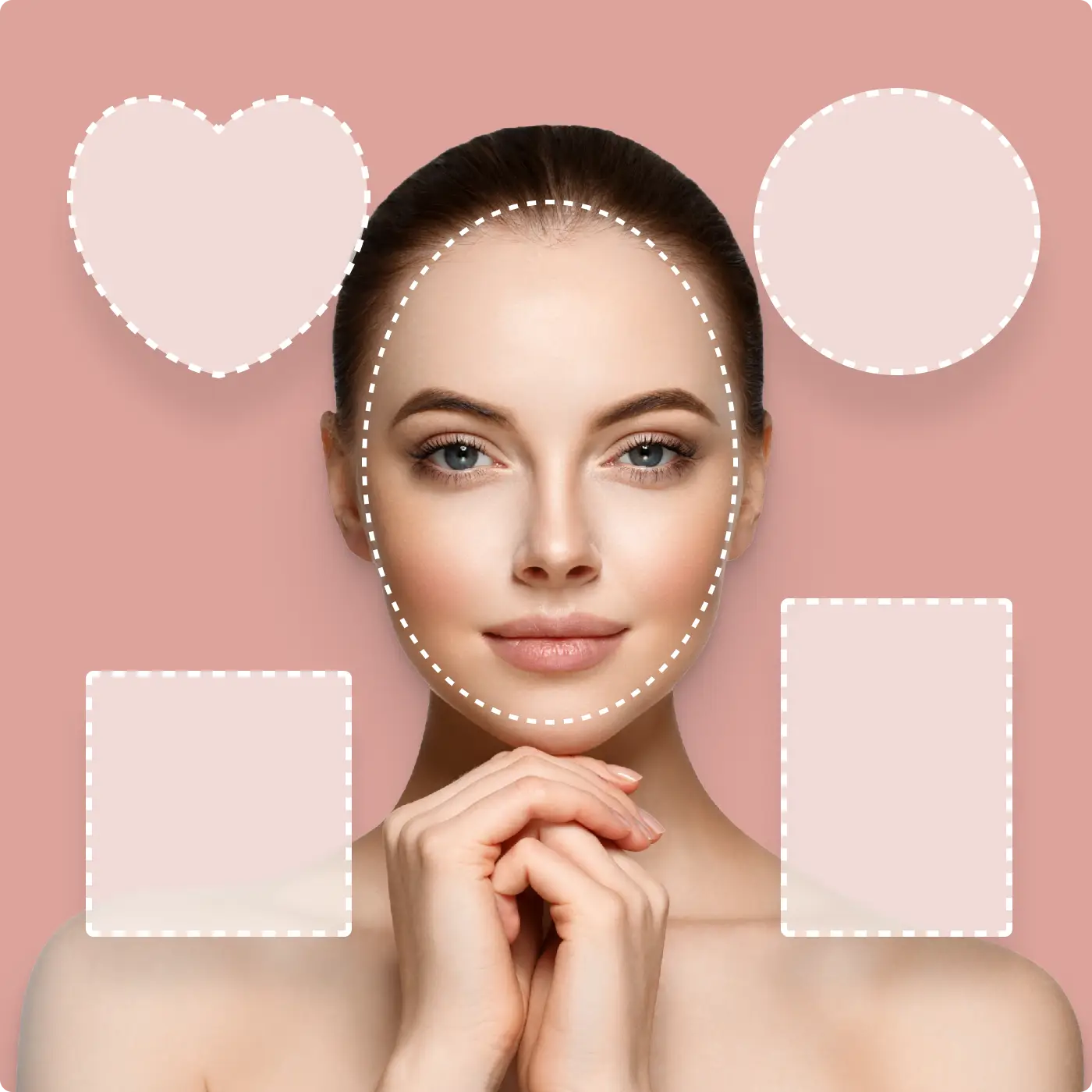
An oblong face is noticeably longer than it is wide. The forehead, cheekbones, and jawline may have relatively similar widths, while the overall facial length creates a more elongated appearance.
Layered hairstyles, bangs, and certain wider glasses frames can help create visual balance. Nevertheless, the best choice depends on hair texture, personal taste, and individual facial features.
How to Use a Face Shape Detector
Using a digital facial analysis tool is generally straightforward. Most platforms follow a simple process that does not require advanced technical knowledge.
First, choose a reliable tool that offers facial shape analysis. Some websites allow users to upload an existing photograph, while others provide a camera-based option. Select a clear, front-facing photograph where the entire face is visible.
Next, make sure the image has suitable lighting. Natural light can help the software identify facial edges and important landmarks more accurately. Avoid photographs with heavy filters, strong shadows, or objects covering the face.
After uploading the photograph, follow the instructions provided by the platform. The software may take a few seconds to analyze facial proportions and display an estimated category. Review the result and compare it with your visible facial characteristics to understand whether the suggested classification seems reasonable.
Benefits of Using a Face Shape Detector
Digital face analysis tools offer several practical benefits for people interested in personal styling and appearance.
1. Better Hairstyle Selection: Understanding your face shape can help you explore hairstyles that complement your facial proportions. It provides a useful starting point when considering short haircuts, long layers, bangs, or different parting styles.
2. Choosing Suitable Glasses: Face shape information can help narrow down eyewear options. For example, people may compare angular and rounded frames to see which styles create their preferred appearance.
3. Makeup Planning: Facial proportions can provide helpful guidance when experimenting with contouring, blush placement, and highlighting techniques.
4. Personal Style Exploration: Learning about facial structure encourages people to experiment with different looks and understand which styles they personally enjoy.
5. Convenience: Online tools make facial analysis accessible without requiring professional equipment or a personal styling appointment.
Tips for Getting More Accurate Results
The quality of the photograph plays an important role in facial analysis. If you want more useful results, choose an image taken directly from the front rather than from above, below, or the side. Keep your head straight and maintain a natural facial expression so the software can examine the visible outline.
It is also helpful to move your hair away from your forehead and cheeks. Hair covering the sides of your face can make it difficult for the system to identify the actual facial boundaries. Use balanced lighting and avoid beauty filters that change your natural facial proportions.
For a more reliable comparison, consider using two or three photographs taken under similar conditions. If the results differ, compare the suggested categories with your actual forehead, cheekbone, jawline, and face-length proportions. A face shape detector should support your understanding rather than replace your own observation.
Face Shape Detector vs. Manual Face Shape Analysis
Both automated detection and manual measurement can help identify facial structure, but they work differently.
A digital tool uses image analysis and facial landmarks to estimate proportions. It is generally quicker and may provide results within seconds. Manual analysis involves examining the face in a mirror or measuring different areas with a flexible measuring tape.
For manual analysis, measure the forehead at its widest point, the cheekbones across their widest area, the jawline from the chin toward the ear, and the total face length from the hairline to the chin. Compare these measurements to understand which category most closely matches your facial proportions.
Neither approach is perfect. Some people have mixed facial characteristics that do not fit neatly into one category. Combining manual observation with digital results can provide a more complete understanding.
Can Artificial Intelligence Identify Your Face Shape Correctly?
Artificial intelligence has made facial analysis more accessible by allowing software to recognize patterns and estimate facial proportions. Modern systems can identify important facial landmarks and use them to classify different facial structures.
However, AI-based results are not always completely accurate. Different camera lenses, lighting conditions, facial angles, and image quality can influence the analysis. Some tools may also use simplified classification systems that do not account for mixed or unusual facial proportions.
It is important to understand that face shape is a general styling concept rather than a strict scientific identity. Two people may have similar facial structures but different features. A face shape detector can provide useful guidance, but its recommendations should always be considered alongside personal preferences.
Privacy and Safety Considerations
Before uploading a photograph to an online facial analysis platform, consider how the website handles personal images. Facial photographs are personal information, and some platforms may store uploaded images or process them through third-party services.
Read the privacy policy to understand whether photographs are stored, how long they are retained, and whether they are used for additional purposes. Prefer platforms that clearly explain their data-handling practices and provide information about image deletion.
Avoid uploading photographs containing sensitive personal information. If a platform requests unnecessary permissions or provides unclear privacy information, consider using another option. Responsible use of facial analysis technology involves understanding both its benefits and potential privacy limitations.
Common Mistakes to Avoid During Face Shape Analysis
One common mistake is relying on a photograph taken from an extreme angle. This can make the forehead, cheeks, or jawline appear wider or narrower than they actually are. Another mistake is assuming that hairstyle and facial hair accurately represent the natural outline of the face.
People also sometimes expect every face to fit into one exact category. In reality, facial structures are diverse, and many individuals have characteristics that overlap between oval, round, square, and other shapes.
When using a face shape detector, avoid treating the result as a fixed beauty standard. Facial shapes do not determine attractiveness, personality, or individual value. The purpose of analysis is simply to understand proportions and explore personal styling possibilities.
Future of Face Shape Detection Technology
Facial analysis technology continues to develop as artificial intelligence and computer vision become more advanced. Future applications may offer more detailed facial proportion measurements, improved image recognition, and personalized styling suggestions.
For example, digital styling platforms may combine facial analysis with virtual hairstyle previews, eyewear recommendations, and makeup simulations. This could make it easier for users to explore different appearances before making personal styling decisions.
Mobile applications may also provide faster processing and more convenient interfaces. However, future development should prioritize transparency, privacy protection, and responsible handling of facial information. Accuracy and user control will remain important considerations as these technologies become more widely available.
Frequently Asked Questions (FAQs)

1. What is a face shape detector used for?
It is used to estimate facial structure by examining features such as forehead width, cheekbones, jawline, and face length. The results can help people explore hairstyles, glasses, and makeup styles.
2. Can I detect my face shape using a photograph?
Yes. Many online tools allow users to upload a clear front-facing photograph. The software analyzes visible facial proportions and suggests a possible face shape.
3. Which face shape is considered the most versatile?
Oval faces are often described as versatile because their proportions can complement many hairstyles and eyewear styles. However, every face shape offers different styling possibilities.
4. Are online face shape detection tools accurate?
They can provide useful estimates, but accuracy depends on lighting, camera angle, image quality, and facial visibility. Their results should not be treated as completely definitive.
5. Can my face shape change over time?
Facial appearance can change due to aging, natural development, weight fluctuations, and other factors. These changes may affect how prominent certain facial proportions appear.
6. Is it safe to upload my photograph to a face analysis website?
It depends on the platform’s privacy and security practices. Always review its privacy policy and understand how your photograph will be stored, processed, or deleted.
Conclusion
Understanding facial proportions can make personal styling decisions easier and more enjoyable. From choosing hairstyles and glasses to experimenting with makeup, knowing your general face shape provides a useful starting point for exploring different looks. Modern artificial intelligence has made this process more convenient by allowing people to analyze photographs through digital platforms.
A face shape detector can help identify common facial categories, including oval, round, square, heart, diamond, and oblong. Although its results may not always be perfectly accurate, it offers a simple way to learn about facial structure. By combining digital analysis with manual observation and personal preferences, anyone can explore styling choices that reflect their individuality. Ultimately, the best style is the one that makes you feel comfortable and confident.

